

Major cuts in Governor Dunleavy proposed FY20 amended budget
Today Governor Dunleavy unveiled his proposed amended budget, SB 20 which calls for $1.6 billion in cuts from the FY 2020 budget. Public education received a proposed cut of over $330 million, or a little over 24% of the education budget. This equals about 3,100 teacher positions. Included in these cuts is a $269 million reduction in the foundation formula and the elimination of the $30 million in FY 20 one-time education funding that was agreed to last year.
Today Governor Dunleavy unveiled his proposed amended budget, SB 20. His goal as previously stated is to align state revenues with expenditures. The administration proposed no new taxes and the budget doesn’t propose a Constitutional Budget Reserve draw to close the budget deficit which has been done in past years. The Constitutional budget reserve has only about $2 billion left. The budget also calls for Alaskans to be paid a full dividend. So in order to align revenues and expenditures $1.6 billion must be cut from the FY 2020 budget.
A broad look at the proposed budget shows a 44 percent cut to the University of Alaska, which could force closure of branches of the University of Alaska system. The Health and Social Services Department was cut by 31 percent and the Pioneer Home system was cut by half with a proposal for future residents to be charged. Public broadcasting was eliminated and the state ferry system was drastically cut with the proposal to privatize parts of it. Education was reduced by 24.3 percent.
The only areas of the budget receiving increases are areas addressing public safety. Some functions like investigators, human resources and payroll will be consolidated in the Department of Administration for cost savings. One of the more contentious proposals is SB 57, which proposes to repeal the ability of municipalities to tax on oil and gas infrastructure with the revenue instead going to the state. The compromise is that the state will share alcohol tax revenue with the municipalities so that they can address substance abuse issues. Expect this to be a big battle.
Public education received a proposed cut of over $330 million, or a little over 24% of the education budget. This equals about 3,100 teacher positions. Included in these cuts is a $269 million reduction in the foundation formula and the elimination of the $30 million in FY 20 one-time education funding that was agreed to last year. The proposed budget repeals the School Debt Reimbursement Program, Alaska State Council on the Arts, the WWAMI Medical Program, and the Alaska Commission on Postsecondary Education along with the Alaska Student Loan Corporation. The proposed budget also eliminates the following programs:
Live Homework Help,
Online with Libraries,
Early Childhood Grants,
Head Start Grants,
Best Beginnings,
Parents as Teachers and,
Pre-Kindergarten Grants.
It is important to note that this is just a proposed budget and must be reviewed and passed by both bodies of the legislature. As an organization we will need to let our legislators know that education needs reliable and equitable funding, including Pre-kindergarten, reinstatement of bond-debt reimbursement, and continued investment in major maintenance.
On another note, the House of Representatives is still unorganized despite several attempts to elect a Republican Speaker of the House. Rumor has it that an organization will now be formed around an agreed upon budget and possibly some budget related bills. Considering the depth of the cuts it may take some time to reach an agreement.
A more detailed budget analysis will be provided as more details become available.
Chris and Reggie
J and H Consulting

Education Legislation Signed Into Law
Coalition for Education Equity executive director, Sarah Sledge traveled to Fairbanks August 10 to join Governor Bill Walker as he signed several key education bills into law. CEE supported all of these bills, and specifically worked to get HB 212 introduced and passed. This bill will provide an additional avenue for our rural and small schools to obtain funding for major maintenance projects, helping us save money on future construction costs and ensuring our children have safe spaces in which to learn.
Coalition for Education Equity executive director, Sarah Sledge traveled to Fairbanks August 10 to join Governor Bill Walker as he signed several key education bills into law. CEE supported all of these bills, and specifically worked to get HB 212 introduced and passed. This bill will provide an additional avenue for our rural and small schools to obtain funding for major maintenance projects, helping us save money on future construction costs and ensuring our children have safe spaces in which to learn. Earlier that week, HB 135 was signed, providing an opportunity for communities to have extended time to meet their local match for construction funds. Both of these bills are part of our multi-year work to improve access to and usage of the REAA/Small Schools Construction fund. Working to ensure reliable, adequate, and equitable funding for school construction and major maintenance is one of our ongoing priority areas. See all of our priority areas and learn more about our accomplishments!

End of the 2018 Legislative Session
We have received the end-of-session report from our government relations consultants. The report provides a detailed look at revenue, funding, and specific education legislation we were following or actively working on for passage. We worked with many other education organizations and activists to secure advance and increased funding for education. I am particularly proud of our years of committed work to sustain funding and expand pre-elementary programs statewide, and our continued and successful advocacy for school construction and major maintenance.
We have received the end-of-session report from our government relations consultants, Christine Hess and Reggie Joule. The report provides a detailed look at revenue, funding, and specific education legislation we were following or actively working on for passage. We are proud to have worked with many other education organizations and activists to secure advance and increased funding for education and also worked to move passage of HB 213 (Public Schools Trust Fund, combined with SB 78, Education Lottery Fund), which will provide future revenue resources for education.
I am particularly proud of our years of committed work to sustain funding and expand pre-elementary programs statewide. We have been successful over the past few years in sustaining existing pre-elementary grant funding ($2 million), and extending these grant programs to school districts previously covered by Moore settlement grants ($1.2 million). We’ve been working with DEED to plan for sustainable expansion of high quality pre-elementary across the state, and have used our advocacy role to educate legislators about the importance of high-quality pre-K in closing achievement gaps and the need for increased access to these programs. We are extremely gratified that this year’s legislature preserved current funding levels for pre-elementary programs, and also included $6 million additional funds for pre-k over the next two years!
I’m also very proud of our continued and successful advocacy for school construction and major maintenance. We succeeded in getting passage of our two bills (HB 212 and SB 135) and school major maintenance was funded in the capital budget at $24 million. Please see attached document for the full report.
Thank you to Chris and Reggie for their excellent work, and to all of you who have advocated on behalf of our children, educators, and schools. We’ll be back at it soon enough. Wishing you all a wonderful summer!
- Sarah Sledge, Executive Director

Education Budget Closeouts
The House and Senate are working on closing out the FY 19 department budget subcommittee reports. The House is taking public testimony on the FY 19 budgets this week. From there the FY 19 budgets will go to the House floor for a vote. The Senate is scheduling final close out of the department budgets for next week with public testimony on the proposed FY 19 budget not yet scheduled.
The House and Senate are working on closing out the FY 19 department budget subcommittee reports. The House is taking public testimony on the FY 19 budgets this week. From there the FY 19 budgets will go to the House floor for a vote. The Senate is scheduling final close out of the department budgets for next week with public testimony on the proposed FY 19 budget not yet scheduled.
On the House side, several changes were made to the education budget. At Governor Walker’s request, the subcommittee added one research analyst position to collect additional information on school performance at a cost of $97,000. An additional $250,000 in receipt authority was added for the Mt. Edgecumbe High School aquatic center. $105,000 in funding was restored for a grant-in-aid museum program that assists small museums. The University of Alaska received an additional $19 million in funding. All major funding items for education remain flat funded (ie; pupil transportation, foundation formula, pre-kindergarten). In the subcommittee process, the Senate added funding for community revenue sharing. The revenue sharing program helps communities meet the needs of their regions, including contributions to school funding. Next week many committees are also reviewing candidates for a variety of boards and commissions.
Although everyone was originally hopeful that the legislative session would adjourn in 90 days the two sides appear to be moving further apart. Both sides agree that some use of the Permanent Fund Earnings Reserve needs to occur this year but there is no agreement on how that should be accomplished. The House wants any use of the PFD Earnings Reserve to be paired with some form of tax. The Senate maintains that no tax is needed because the price of oil and other revenues has been higher than originally anticipated. The Senate also maintains that the FY 19 budget needs to be further reduced and state government down sized before any tax is implemented. These opposing views may eventually lead to a deadlock down the road.
Full report contains an updated list of education related bills.
Major Maintenance Funding: House Bill 212
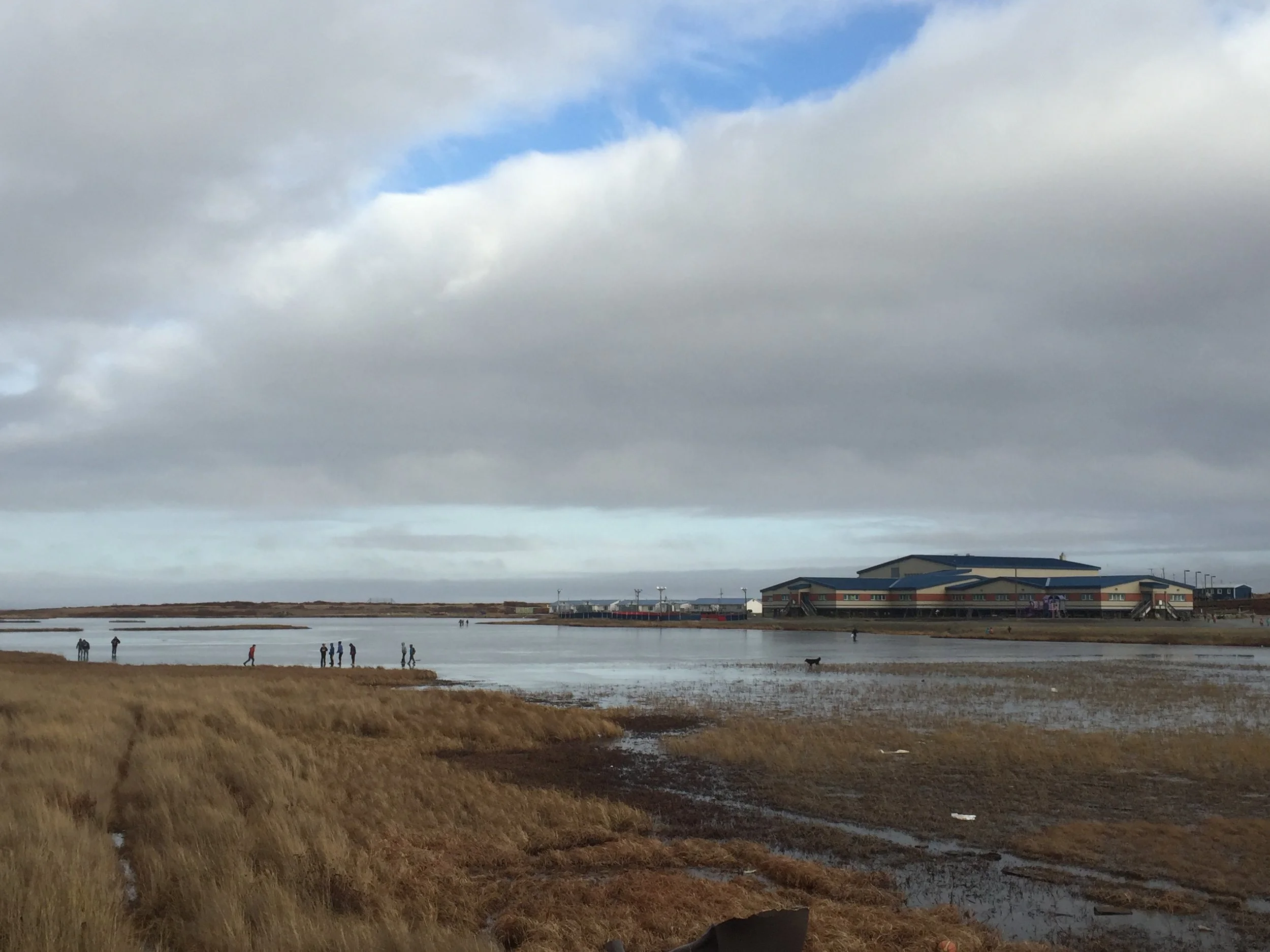
Coalition for Education Equity Executive Director, Sarah Sledge, provided testimony yesterday for House Bill 212's first hearing in the House Education Committee. Coalition for Education Equity worked last year to get this bill introduced, which would allow the REAA/Small Schools construction fund to also be used for major maintenance. Read the full text of Sarah's testimony here:
Coalition for Education Equity Executive Director, Sarah Sledge, provided testimony yesterday for House Bill 212's first hearing in the House Education Committee. Coalition for Education Equity worked last year to get this bill introduced, which would allow the REAA/Small Schools construction fund to also be used for major maintenance. Read the full text of Sarah's testimony below:
Good morning. My name is Sarah Sledge. I am the executive director of the Coalition for Education Equity, a statewide organization representing Alaska school districts, organizations, and individuals concerned about the quality and breadth of educational opportunities available to Alaska’s children.
Formerly known as Citizens for the Educational Advancement of Alaska’s Children, or CEAAC, we advocated for education reform at the legislative level while fighting the Kasayulie and Moore lawsuits, which were settled in 2011 and 2012 respectively.
Pertinent to today’s discussion of House Bill 212 is the Kasayulie vs State of Alaska lawsuit, which was filed in 1997 regarding the method of funding capital projects for education. At the time the lawsuit was filed, many of the physical facilities within plaintiff school districts were in dire need of replacement and/or major maintenance, exhibiting widespread deterioration, physical dangers, structural deficiencies, inability to satisfy relevant code requirements, and a lack of sufficient instructional space. Additionally, as REAAs, these school districts didn’t (and still don’t) have taxable real property or the legal authority to raise capital funds through a local capital tax levy or bond issue. At the same time, most municipal school districts had bonding capacity sufficient to raise capital funds and also had access to state funding for capital projects through the state’s debt reimbursement program. This resulted in disparities between facilities in plaintiff school districts and those in districts with the ability to pass local bond issues to raise the necessary capital for facilities funding, major maintenance and renovation.
In 1999, the court found that the State’s history and practice in funding construction of rural school facilities violated its obligations under the Education and Equal Protection Clauses of the Alaska Constitution and Title VI of the Civil Rights Act. CEAAC and the State of Alaska reached a settlement in the lawsuit in 2011. Prior to the settlement, CEAAC worked with legislators in 2010 to win passage of Senate Bill 237, which directs 24% of funds allocated to bond debt reimbursement to REAA schools on the Department of Education and Early Development’s CIP list. This established a systematic mechanism for identifying funding amounts for rural school construction and was expanded to include small municipal districts in 2013.
When SB 237 was drafted and moving through the legislative process, there was discussion about including language in the bill that would permit the fund to be used for both school construction and major maintenance projects. However, the need for school construction was great, and so it was given priority. While several school construction projects remain on the CIP list, many have been completed and there is now a significant backlog of major maintenance projects in our REAA and small municipal school districts.
As a result, we again find ourselves in the situation of seeing deterioration of school facilities creating unsafe or uncomfortable environments, environments that interfere with or impede the ability of students to learn, or, at the very least, increased costs for maintenance. We are also concerned that continued deferment of major maintenance will necessitate a larger number of school construction projects in the future, at great cost to our state.
House Bill 212 seeks to allow the REAA and small municipal school district fund to be used for major maintenance in addition to school construction. We believe this bill follows the intent of the Kasayulie case, seeking to achieve parity in funding between areas that have bonding capacity and those that do not. The Coalition for Education Equity supports House Bill 212.
Thank you.
Beginning of the 2018 Legislative Session
In the first several weeks of session the Legislature has been busy with budget overviews, revenue projections, and subcommittee finance hearings overviewing individual department budgets. In a second session, all of the bills from the first session that have not passed are still in play, so the pace is fast from the beginning. Last week, the House Finance Operating Budget Subcommittees held 21 meetings to examine department budgets.
In the first several weeks of session the Legislature has been busy with budget overviews, revenue projections, and subcommittee finance hearings overviewing individual department budgets. In a second session, all of the bills from the first session that have not passed are still in play, so the pace is fast from the beginning. Last week, the House Finance Operating Budget Subcommittees held 21 meetings to examine department budgets. Subcommittees have until February 23rd to complete their budget analyses, and to provide recommendations to the House Finance Committee in the form of a narrative report and a report listing amendments adopted by the subcommittee. The House Finance Committee will then review the budget as a whole before it goes to the floor for a vote. After that the budget bills head to the Senate for consideration. Bills are also being heard in committee.
With Executive Director Sarah Sledge, J and H Consultants has been meeting with members of the Senate and House Education and Finance Committees and members in leadership to discuss the Coalition for Education Equity’s recent work, priorities, and specific legislation important to CEE. CEE has requested committee time to present about their work, including the teacher retention study and the Ed Connector. The response to the hearing request was very positive and a hearing is secured in front of the Joint Education Committee on March 12.
CEE is also working with Senator Stevens’ office to introduce a resolution that addresses the recent issues with the Federal Impact Aid Program. The resolution will request that the Alaska Congressional Delegation work on some solutions to address the audit problems in Alaska stemming from Alaska’s unique survey and land title issues. As many of you are aware, some school districts have recently lost Federal Impact Aid money because they were unable to verify land status as Native. One of the suggestions is to shift the burden from the school districts to the federal government on any lands that were originally conveyed as part of the Alaska Native Claims Settlement Act (ANCSA). The request would be that all lands conveyed under ANCSA would be presumed Native and the federal government would bear the burden of proof to prove otherwise.
Below is a list of bills that CEE has been working on with legislators.
CEE Priority - School Funding and Pre-Kindergarten
CEE has met with many members of the House and Senate Education and Finance Committees about the importance of school funding, emphasizing that schools need to know funding allocations by early April. CEE has noted their support for the bills listed below:
HB 339 – Increase BSA: This bill was introduced just last week. The bill increases the Base Student Allocation by $100.00. The House Education Committee will hear the bill on Monday and take public testimony at 8 a.m.
SB 131 – School Funding: SB 131, introduced this year by Senator Gary Stevens, budgets for public school funding separately from the state's operating and capital budgets and requires a passage date of April 1st each year. The idea is that early passage of the education budget will give schools plenty of time to plan their budgets. The bill is in Senate Finance.
HB 287 – School Funding: HB 287, introduced this year by Senator Seaton, also funds education and pupil transportation in a separate bill. Again, the idea is that early passage of the education budget will give schools plenty of time to plan their budgets. Funding is set at the Governor’s proposed levels. HB 287 makes appropriations from the Constitutional Budget Reserve fund (CBR) and from the Statutory Budget Reserve fund (SBR) for K-12 education and student transportation. Drawing from these revenue sources requires a ¾ vote. House Bill 287 passed the House by a vote of 33-3. The provision making an appropriation out of the CBR required a three-quarters vote of House members. It failed by a vote of 20-16. It is still possible to use the CBR to early-fund public education if the bill and CBR appropriation are approved by the Senate and three-quarters of the House members vote for the provision at final passage during the concurrence vote. HB 287 and SB 131 are complimentary bills. HB 287 covers education funding for FY 19 and SB 131 covers education funding in future years. It is possible the bills will be merged in the Senate.
CSHB 213 – Public Schools Trust Fund: The Public Schools Trust Fund is a pre-statehood fund dedicated to schools and is currently worth approximately $670 million. In the 1970’s, the Legislature converted the fund from a land trust to a cash fund. Currently, statute allows only the net income to be withdrawn from the fund and not any capital gains. HB 213 would change the fund management to be more like an endowment, allowing for a higher rate of return on investments and more income to be used to fund schools each year. According to Mike Barnhill, Deputy Commissioner for the Department of Revenue, the current statutory approach to managing the funds is outdated. Instead of focusing on principal remaining, the focus should be on maintaining inflation- adjusted principal. In current practice, management of most endowments and dividend payment on net income has changed to a percent of market value (POMV). An appropriate POMV won’t erode the inflation-adjusted principal. The Committee Substitute (CS) introduced for HB 213 pays out a 4.75% POMV draw based on a 5-year fund value, not including the previous fiscal year. The bill moved out of House Finance last week and next will be on the House Floor.
SB 99 - Pre-Elementary: Phases in a voluntary statewide Pre-K program over 5 years, starting with the lowest performing schools. Heard and held in Senate Education.
CEE Priority – School Construction and Maintenance
CEE has been working with several legislative offices to work out issues on the bills listed below. Several of the issues are unique and are detailed under each bill.
CSHB 135 – School Construction: This bill allows the Commissioner of Education to extend the time frame in which a district must provide the required participating share of the projected construction cost to five years, with a three year extension for good cause. The bill passed the House and has moved to the Senate for consideration. The bill is currently in Senate Finance. The bill was originally sponsored by Representative Westlake, who has since resigned. The bill must be returned to the House to obtain a new sponsor, which is likely to be Representative Lincoln. CEE has worked with Representatives LeDoux, Edgmon, and Lincoln, and with the offices of Senators Kelly and Hoffman to work out the procedural mechanisms that need to occur so HB 131 can be heard in Senate Finance. The bill should be returned to the House for the sponsor change on Monday. Once this procedural change has been made the bill will be returned to Senate Finance. Several senators are ready to assist in getting the bill heard and moved out of Senate Finance.
HB 212 - REAA Schools: Allows the REAA fund to be used for major maintenance, as well as school construction. The Department of Education has indicated that money for major maintenance will not be available until fiscal year 2020, so the bill didn’t move through the committee process last year. The bill has referrals to the Education and Finance Committees and is expected to move this legislative session. The bill was originally sponsored by Representative Westlake, so this bill will also need a new sponsor. CEE has worked with Representatives Edgmon and Foster to work out the procedural mechanisms to get the sponsorship changed. Once this procedural change has been made the bill will be able to move through the committee process. The new sponsor is likely to be Representative Foster.
CEE Priority – Teacher Retention
HB 224 - Teacher Rehire: Allows retired teachers and administrators to be rehired. Over the interim, CEE contacted the sponsor’s office to check on the progress of the bill being modified to solve the retirement and health benefit issues. The bill has been revised to address concerns raised by the Division of Retirement and Benefits. The NEA wants an additional two revisions to the bill to include proof of public advertising for the position and that any teacher contract is for no more than a year. These amendments aren’t expected to derail the bill. CEE has spoken with many members of the Education and Finance Committees, along with other education organizations, about the importance of this bill. CEE is also looking for a sponsor to introduce and carry a Senate companion bill. CEE is hoping to have a Senate sponsor soon. The bill has had several hearings in the State Affairs Committee and is expected to move out of the committee next week.
HB 83 – Defined Benefit: The bill establishes new defined benefit tiers in the Public Employees' Retirement System and the Teachers' Retirement System and provides certain employees an opportunity to choose between the defined benefit and defined contribution plans of PERS and TRS. A return to a defined benefit system may help retain teachers. The bill has three committees of referral which will slow the bill down.
The status of other education bills we're following can be found in the full report.
The 30th Session of the Alaska State Legislature begins
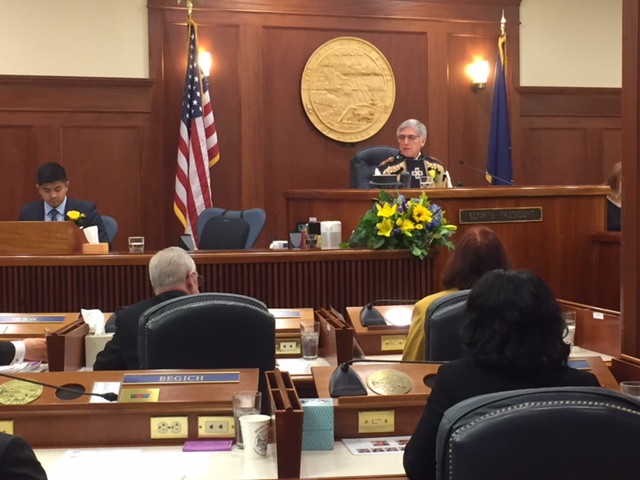
Our long-time government relations director, Tom Begich, was sworn in yesterday as a newly elected State Senator and while we're sorry to lose his expertise on our team, we are happy to have another ally for public education in the State Senate. To fill this role moving forward, we are pleased to announce that we have contracted with J and H Consulting (Reggie Joule and Christine Hess) to carry on our legislative program this session.
Our long-time government relations director, Tom Begich, was sworn in yesterday as a newly elected State Senator and while we're sorry to lose his expertise on our team, we are happy to have another ally for public education in the State Senate. To fill this role moving forward, we are pleased to announce that we have contracted with J and H Consulting (Reggie Joule and Christine Hess) to carry on our legislative program this session. They bring a wealth of knowledge and experience to the table and are a wonderful addition to our team. You can learn more about Chris and Reggie and read their first session update on our website. Executive Director, Sarah Sledge, will also be in Juneau throughout the session.
Of note: the Senate Majority held their first press conference yesterday (1/17/17) and shared their intention to cut state operating expenses by $750 million over the next three years (5%, or $3 million in cuts this year). K-12 education and University of Alaska are among the four budget items they will be looking at for cuts. When asked if the foundation formula would be looked at, Senator Hoffman indicated that no specifics have been determined yet and would be considered in Senate Finance Committee. We'll be watching this closely and keeping you aware of any developments.